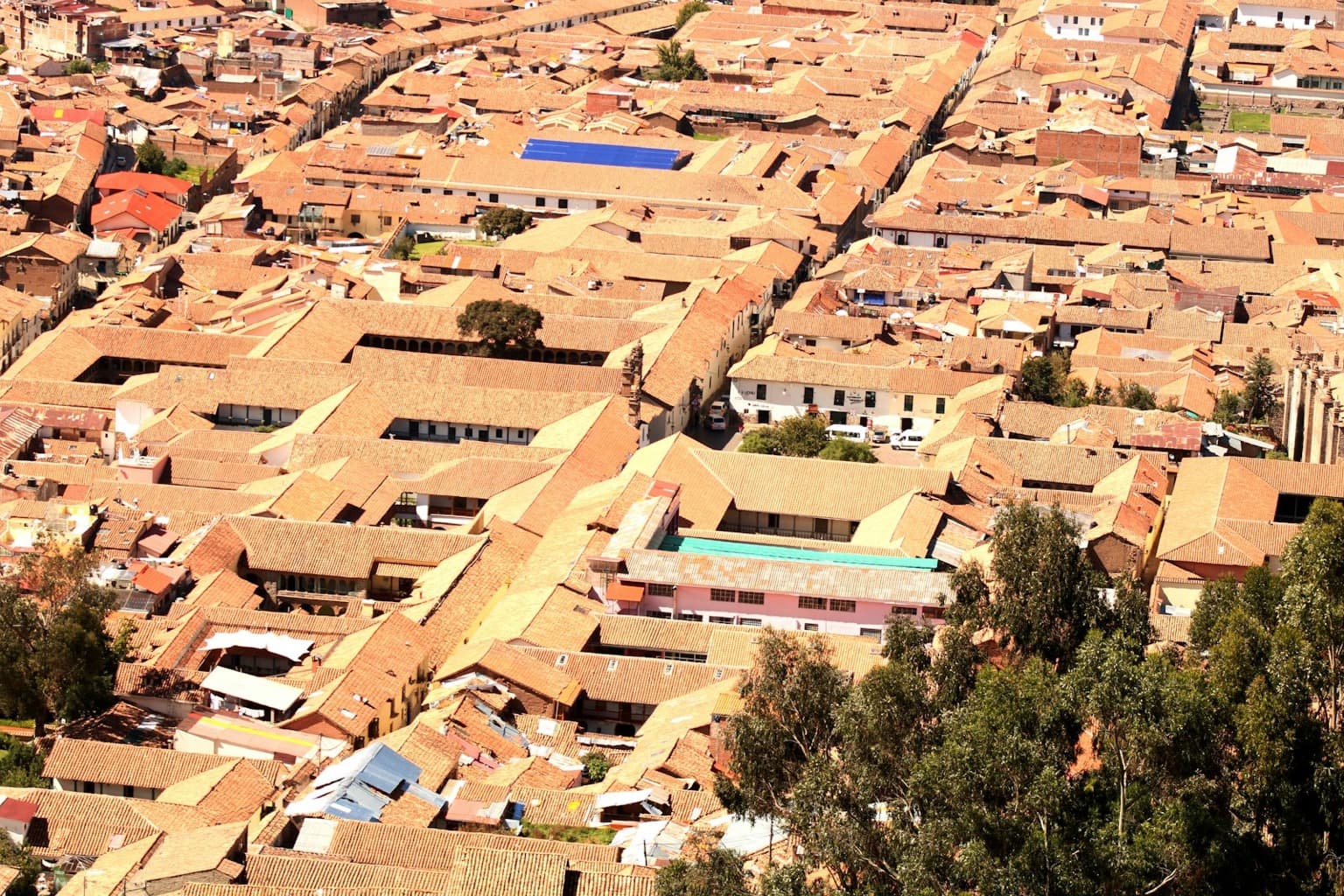
For most travelers, Cusco is a two-night stop on the way to Machu Picchu: acclimatize, buy an alpaca sweater, catch the train. And Machu Picchu deserves the pilgrimage. But treating Cusco as a waiting room does a genuine disservice to one of the most extraordinary cities in the Americas — a former Inca capital layered under Spanish baroque, sitting at 3,400 meters in the middle of the sacred Andes, with far more inside it than a departure gate.
Machu Picchu is the headline. Cusco is the story most people skip.
Two travelers can arrive in Cusco with the same three days before the train, and the right trip for one is a high-altitude trek to a glacial lake at 4,600 meters while the right trip for the other is a slow morning in a colonial courtyard learning how the Inca cut stone that still can't be replicated. Neither is wasting the acclimatization days. They're using them for completely different things.
At Wayfound, we've identified 12 travel archetypes — patterns of instinct and curiosity that decide what makes a trip feel like yours. Not abstract labels, but real differences in how you'd spend a free afternoon in a new place. Cusco and the Sacred Valley, where raw mountain wilderness meets one of history's most sophisticated civilizations, pull those instincts hard in opposite directions.
The Cusco an Avid Adventurer builds around the Ausangate trek, Rainbow Mountain, and rafting the Urubamba looks nothing like the Cusco a Lifelong Learner builds around Qorikancha, the ruins above the city, and the question of how the Inca ran an empire without the wheel or writing. Same thin air. Two entirely different weeks.
Below are five complete three-day itineraries based in Cusco and the Sacred Valley, each designed for a specific travel archetype. Everything is real and specific. But the point isn't the list — it's seeing how differently the Andes treat you depending on who you are. (A note that applies to everyone: build in time to acclimatize before anything strenuous — the altitude is real.)
Cusco at altitude and full effort
The Avid Adventurer sees the Andes around Cusco and wants in — the high passes, the glacial lakes, the rivers coming off the ice. The instinct is to earn the landscape rather than photograph it from the train, and the region delivers on a serious scale, provided you respect the altitude first. This is trekking and adventure at the demanding end, with rewards to match.
Acclimatize with intent: hike the ruins circuit above the city on foot — Sacsayhuamán, Q'enqo, and up to the Cristo Blanco — to test the legs and the lungs at altitude before anything bigger. Afternoon mountain biking down into the Sacred Valley. Early night; the real days are coming.
The big one: a pre-dawn start for Rainbow Mountain (Vinicunca) or the tougher, quieter Palccoyo, cresting above 4,900 meters, or a day on the Ausangate trail past turquoise glacial lakes. It's brutal in the thin air and unforgettable. Afternoon recovery and coca tea.
Whitewater raft the Urubamba through the Sacred Valley, then via ferrata and zipline at Cola de Mono near Santa Teresa — some of the highest in South America. If you'd rather walk to Machu Picchu than take the train, this is the day you'd start the Inca or Salkantay trek with a guide.
The Andes at the pace of the mountains
The Nature Enthusiast came for the landscape itself — the high plains, the terraced valleys, the light at altitude that makes everything look unreal. The instinct isn't to conquer the peaks but to be among them: the quiet lake, the condor riding a thermal, the valley opening up around a bend. The Sacred Valley is one of the most beautiful inhabited landscapes on earth, and this archetype should give it time.
Head into the Sacred Valley slowly — the Maras salt pans cascading down the hillside in thousands of pale pools, and the concentric agricultural terraces of Moray. Afternoon among the fields and eucalyptus of the valley floor, where the pace finally drops. Overnight in Urubamba or Ollantaytambo.
A gentler high day: the Humantay Lake hike to a glacial turquoise pool beneath a snow peak, or the quieter valleys around Lares. It's altitude, but taken slowly it's pure landscape and few crowds. Watch for condors and the enormous Andean sky.
The train to Machu Picchu along the Urubamba gorge is one of the great scenic rail journeys, and the citadel itself — reached at first light before the day trippers — is as much a landscape as a ruin, terraces falling away into cloud forest. Give it the whole morning and let it be quiet.
Cusco as a place of thin air and thin veils
The Soul Seeker is drawn to Cusco's other reputation — as one of the more spiritually charged places in the Andes, where an old cosmology still runs close to the surface. The instinct here isn't to tick off ruins but to slow down and let the altitude, the mountains, and the depth of the place do their work. Whether the frame is sacred or entirely personal, this is a landscape built for reflection.
Ease into the altitude with a quiet morning in Cusco's courtyards and the stillness of the Qorikancha, the Inca sun temple beneath the Santo Domingo church. Afternoon walk up to the ruins above town in the late light, when the crowds thin. Evening: rest, coca tea, no agenda while you acclimatize.
Into the Sacred Valley for its quieter power — the terraces of Pisac at opening time, a walk in the hills above Ollantaytambo, and time simply sitting where the valley opens out. For those who seek it, the region is known for guided plant-medicine and meditation retreats; for everyone else, the silence at altitude is its own ceremony.
The pilgrimage done right: the early train and the first entry to Machu Picchu, walking up to the Sun Gate or the Inca Bridge for the solitude before the site fills. It's less about the photograph than about standing, briefly, somewhere that rearranges your sense of scale. Return slowly, changed a little.
Cusco as a lesson in a lost empire
The Lifelong Learner hit the jackpot in Cusco: the capital of the largest empire in the pre-Columbian Americas, layered under the architecture of the people who conquered it, with engineering that still isn't fully understood. The instinct here is to understand — how the stones fit, how the empire ran, what the Spanish built on top and why. Cusco isn't a backdrop for this archetype; it's a graduate seminar with mountains.
Start where two civilizations literally stack: Qorikancha, the Inca temple whose flawless stonework survived the earthquakes that toppled the Spanish church built over it. Then the Cathedral and the Inca-walled streets like Hatun Rumiyoc with its famous twelve-angled stone. Afternoon at the Museo Inka for context. Evening: a talk or a good book on Inca history.
A day on the great sites above the city with a knowledgeable guide — Sacsayhuamán's cyclopean walls, Q'enqo, Puka Pukara, and Tambomachay — understanding how they worked, not just how they photograph. Afternoon at the Center for Traditional Textiles to see a living, unbroken craft tradition explained by its weavers.
The Sacred Valley as engineering marvel: the fortress-temple of Ollantaytambo and the astonishing agricultural laboratory of Moray, then the train to Machu Picchu with a guide who can actually explain the site's astronomy, hydrology, and purpose. You'll leave understanding the Inca, not just having seen them.
Cusco around the shared pot
The Communalist measures a trip in people, and the Andes — where community, or ayllu, is the organizing idea of life, and a shared meal is the center of everything — reward that instinct deeply. The instinct is to choose the connected version of everything: the market, the family table, the trek where a group becomes a unit by day three. Under the ruins and the altitude, this is a profoundly communal culture, and that's the Cusco this archetype should seek.
Dive into the San Pedro Market for the color, the juice stalls, and the vendors happy to explain what everything is. Afternoon on a walking-and-food tour of the San Blas artisan quarter, meeting the makers. Evening: a shared pachamanca meal (food cooked in the earth) or a communal table at a cause-driven spot like a social-enterprise restaurant.
A day with the community: a homestay or weaving-cooperative visit in the Sacred Valley, learning to cook or weave alongside a local family, where the relationship is the point. Afternoon in Pisac's market meeting other travelers. Evening: a group cooking class back in Cusco over pisco sours.
The trek as team: even a one-day guided section toward Machu Picchu turns a group of strangers into a unit by lunchtime — porters, guide, and fellow walkers sharing the effort and the coca leaves. Reach the citadel together. Last night: the big celebratory dinner with everyone you've walked, cooked, and altitude-suffered alongside.
Closing note
Five versions of Cusco — one that spent its days above 4,000 meters, one that never rushed out of a colonial courtyard, and one that made a family of everyone it met on the trail. Same thin air, same sacred valley, five completely different trips. Treating Cusco as a mere gateway to Machu Picchu is the surest way to miss it. Knowing which version is yours is the difference. The Wayfound quiz takes about ten minutes and will tell you where to point these three days.
Which traveler type are you?
Take the Wayfound quiz to discover your archetype, then come back and read the Cusco itinerary that fits you best.