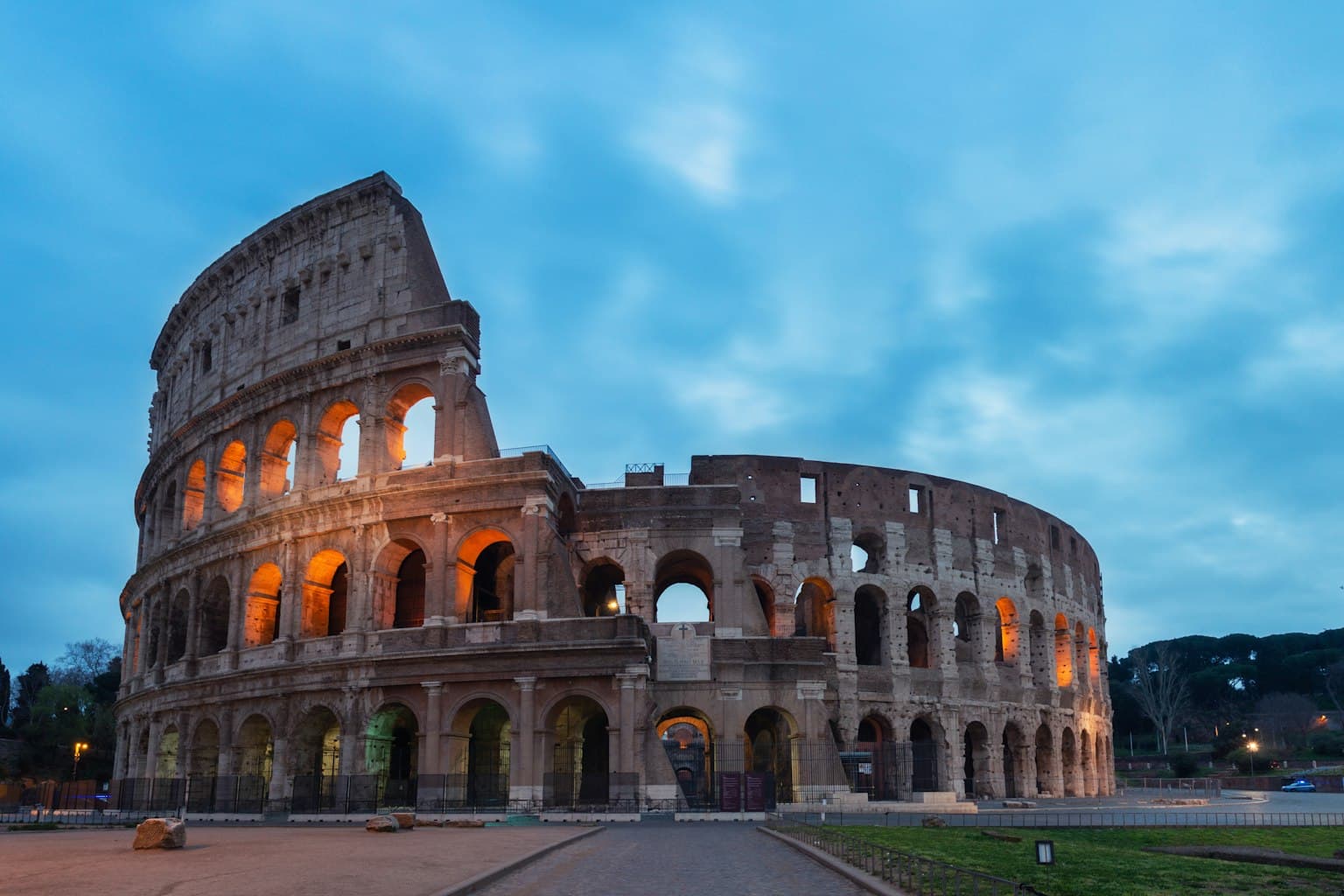
Rome is one of those cities that feels like it should plan itself. The history is so dense, the landmarks so iconic, that most travelers just follow the trail: Colosseum, Vatican, Trevi Fountain, pasta, gelato, done. And it's a good trip — Rome is nearly impossible to do badly. But it's also a city where the gap between a good trip and the right trip is enormous. Because Rome isn't one place. It's dozens of places layered on top of each other across three thousand years, and the version you should be exploring depends entirely on what you're actually looking for.
Most people plan Rome around what's famous. The better question is what's famous to you.
Consider what happens when two travelers stand at the same intersection in Trastevere. One of them is scanning for the trattoria with the handwritten menu and no English translation. The other is thinking about the medieval church across the street and the layers of fresco underneath. A third would walk right past both and head for the rooftop bar with the Aperol Spritz and the view. None of them is doing Rome wrong. But they'd all be disappointed by each other's itinerary.
That's because great travel isn't about seeing the right things — it's about seeing the things that are right for you. At Wayfound, we've mapped 12 distinct travel archetypes: patterns of curiosity, instinct, and motivation that determine what makes a trip feel like yours. Not personality labels. Real differences in how you'd spend a free afternoon in a foreign city.
Rome might be the best city in the world to demonstrate this. It has so much depth — ancient, sacred, culinary, artistic, chaotic, beautiful — that five different travelers could spend three days here and come home with five stories that barely overlap. The Cultural Immersive's Rome is built in neighborhoods tourists never reach. The Lifelong Learner's Rome is built around the Forum and the layers beneath the Basilica di San Clemente. The Bon Vivant's Rome is built around long lunches in Testaccio and natural wine in Monti.
Below are five three-day itineraries, each designed for a specific travel archetype. Every recommendation is real and specific. But the real point is the contrast — seeing how different the right version of Rome looks depending on who you are.
The Rome that lives behind the ruins
The Cultural Immersive wants to understand a place from the inside — not the museum version, but the living version. They're drawn to local rhythm, neighborhood texture, and the parts of a city that haven't been polished for outsiders. In Rome, that means getting out of the centro storico and into the neighborhoods where the city still belongs to the people who live there: Testaccio, Garbatella, Pigneto, the parts of Trastevere the tour groups don't reach.
Morning in Testaccio — the old slaughterhouse district, now home to Rome's most authentic food market (Mercato di Testaccio). Walk the neighborhood, stop at Flavio al Velavevodetto for cacio e pepe. Afternoon at the Protestant Cemetery — Keats and Shelley's graves, one of the most peaceful spots in Rome. Evening aperitivo in Pigneto, Rome's scrappiest, most local neighborhood.
Start at the Centrale Montemartini — ancient Roman sculpture displayed inside a decommissioned power plant (almost no tourists). Walk through Garbatella, a 1920s garden neighborhood that feels like a different city. Lunch at Trattoria Pennestri. Afternoon exploring the Appian Way on foot — ancient road, catacombs, countryside inside the city limits.
Morning at Mercato di Porta Portese (Sunday flea market, enormous, chaotic, real). Walk through Trastevere before noon, when it still belongs to residents. Lunch at Da Enzo al 29. Afternoon wandering the Jewish Ghetto — the oldest continuously inhabited Jewish quarter in Europe. Carciofi alla giudia at Nonna Betta. Evening passeggiata along the Tiber.
Rome as a three-thousand-year lecture
The Lifelong Learner travels to understand. They want context, chronology, and the satisfaction of watching a place make sense as the layers click into place. They're the ones who read every placard, ask the guide follow-up questions, and leave a site with a richer mental model than they arrived with. Rome, which is essentially the entire history of Western civilization compressed into a single walkable city, is arguably the most rewarding destination in the world for this archetype.
Full morning at the Roman Forum and Palatine Hill — hire a licensed guide (worth every euro for the context you can't get from signage). Lunch near the Capitoline. Afternoon at the Capitoline Museums — the world's oldest public museum, and the view from the terrace is Rome's best-kept secret. Evening lecture or talk at the American Academy in Rome or the British School at Rome (both host public events).
Morning at the Basilica di San Clemente — three layers of history stacked vertically: a 12th-century church on top of a 4th-century church on top of a 1st-century Mithraic temple. Lunch in Monti. Afternoon at the Borghese Gallery (book well ahead — the Bernini sculptures alone are a masterclass). Evening walking tour of Baroque Rome: Piazza Navona, Sant'Ivo, the Pantheon at dusk.
Day trip to Ostia Antica — Rome's ancient port city, better preserved and far less crowded than Pompeii. You can wander for hours through streets, apartments, theaters, and baths. Return for dinner near Campo de' Fiori. If time permits, the Crypta Balbi museum tells the story of one Roman city block across two millennia.
The Rome that feeds you
The Bon Vivant builds a trip around pleasure — the meal, the wine, the moment when the light hits the piazza just right and the second carafe arrives. For this archetype, taste is a way of knowing a place, not an indulgence to feel guilty about. Rome is one of the Bon Vivant's great pilgrimage cities: a place where food is tradition, wine is conversation, and the long lunch is a civic institution, not a tourist trap.
Morning espresso at Sant'Eustachio Il Caffè (standing at the bar, like a Roman). Walk to Campo de' Fiori market for the colors and the energy. Late morning wine tasting at Rimessa Roscioli — their cellar is extraordinary. Long lunch at Roscioli itself (the carbonara is legendary). Afternoon gelato walk: Fatamorgana for inventive flavors. Evening: aperitivo at Il Barretto, dinner at Armando al Pantheon.
Morning food tour of Testaccio — the neighborhood that invented Roman cuisine. Lunch at Felice a Testaccio (order the cacio e pepe, watch them finish it tableside). Afternoon exploring the Monti neighborhood — natural wine bars, vintage shops, the quietest piazzas in the center. Evening: cocktails at the Court Bar at the Palazzo Manfredi, dinner at Retrobottega.
Morning at Mercato Trionfale — Rome's largest and least touristy food market. Pick up provisions for a picnic at Villa Doria Pamphili (Rome's biggest park, almost no tourists). Afternoon wine shop browsing in Trastevere — Enoteca Ferrara or Litro. Evening: Roman Jewish cuisine at Piperno, then a nightcap at Salotto 42.
Rome as a place to be still
The Soul Seeker uses travel as a way to get quiet enough to hear themselves think. They don't need the packed itinerary — they need room, beauty, and the kind of stillness that a very old city can sometimes offer between its crowds. Rome, despite its chaos, is secretly one of the great cities for this archetype. Behind every tourist-packed piazza is a courtyard, a cloister, a church with no one in it, a garden where the only sound is a fountain.
Morning at Santa Maria in Trastevere — arrive at opening, before the tourists. Sit with the 12th-century mosaics in near-silence. Walk to the Botanical Garden (Orto Botanico) and stay as long as it feels right. Lunch somewhere simple in Trastevere. Afternoon on the Aventine Hill: the Orange Garden for the view, then the keyhole at the Knights of Malta for the perfectly framed dome of St. Peter's.
Morning walk along the Appian Way — ancient paving stones, cypress trees, no crowds beyond the first kilometer. Visit the Catacombs of San Callisto (the stillness underground is profound). Lunch at a trattoria on Via Appia. Afternoon at the Terme di Caracalla — the ruined baths are vast and haunting. Evening: sit at the Tiber Island as the sun sets.
Start at the Chiostro del Bramante — Renaissance cloister, often with a contemplative art exhibition. Walk through the back streets of the Centro Storico with no destination. Lunch at a quiet trattoria near Piazza Farnese. Afternoon at the church of Sant'Ignazio (lie on the floor and look up — the ceiling illusion is staggering). Evening walk through the Jewish Ghetto and along the river.
The Rome that belongs in a film
The Nostalgic Romantic travels toward beauty, atmosphere, and the ache of old things. They want the crumbling wall, the candlelit trattoria, the fountain at dusk, the feeling that this moment has been happening here for centuries and will continue long after they leave. Rome is the Nostalgic Romantic's spiritual capital. No city on earth does faded grandeur, golden light, and emotional architecture better.
Morning walk from Piazza di Spagna down Via Condotti, through to the Trevi Fountain before 8 a.m. (the only time it's yours). Continue to the Pantheon — stand under the oculus and watch the light. Lunch at a table outside in Piazza della Rotonda. Afternoon at the Villa Borghese gardens: the lake, the temple, the views over Piazza del Popolo. Evening passeggiata along Via del Corso, dinner at a candlelit table in the Ghetto.
Morning at the Keats-Shelley House on the Spanish Steps, then a walk through the Pincio to the Borghese Gallery (the room with Bernini's Apollo and Daphne is one of the most beautiful in the world). Lunch at Antico Caffè Greco (open since 1760). Afternoon crossing the river to Castel Sant'Angelo — walk the ramparts at golden hour. Evening: opera or concert at the Teatro dell'Opera.
Day trip to Tivoli — Villa d'Este for the Renaissance fountains and gardens, or Hadrian's Villa for the ruins. Both are deeply romantic in the old sense of the word. Return for dinner in Trastevere: Da Lucia or Spirito di Vino. End the night with a walk across Ponte Sisto when the city is quiet and lit.
Closing note
Five travelers. Five completely different versions of Rome. And that's the point — Rome has so much inside it that the version you should be planning depends less on the guidebook and more on the person holding it. If you recognized yourself in one of these and felt skeptical of another, pay attention to that. It's telling you something real about how you travel. And if you want to find out exactly which archetype fits you, that's what the quiz is for.
Which traveler type are you?
Take the Wayfound quiz to discover your archetype, then come back and read the Rome itinerary that fits you best.