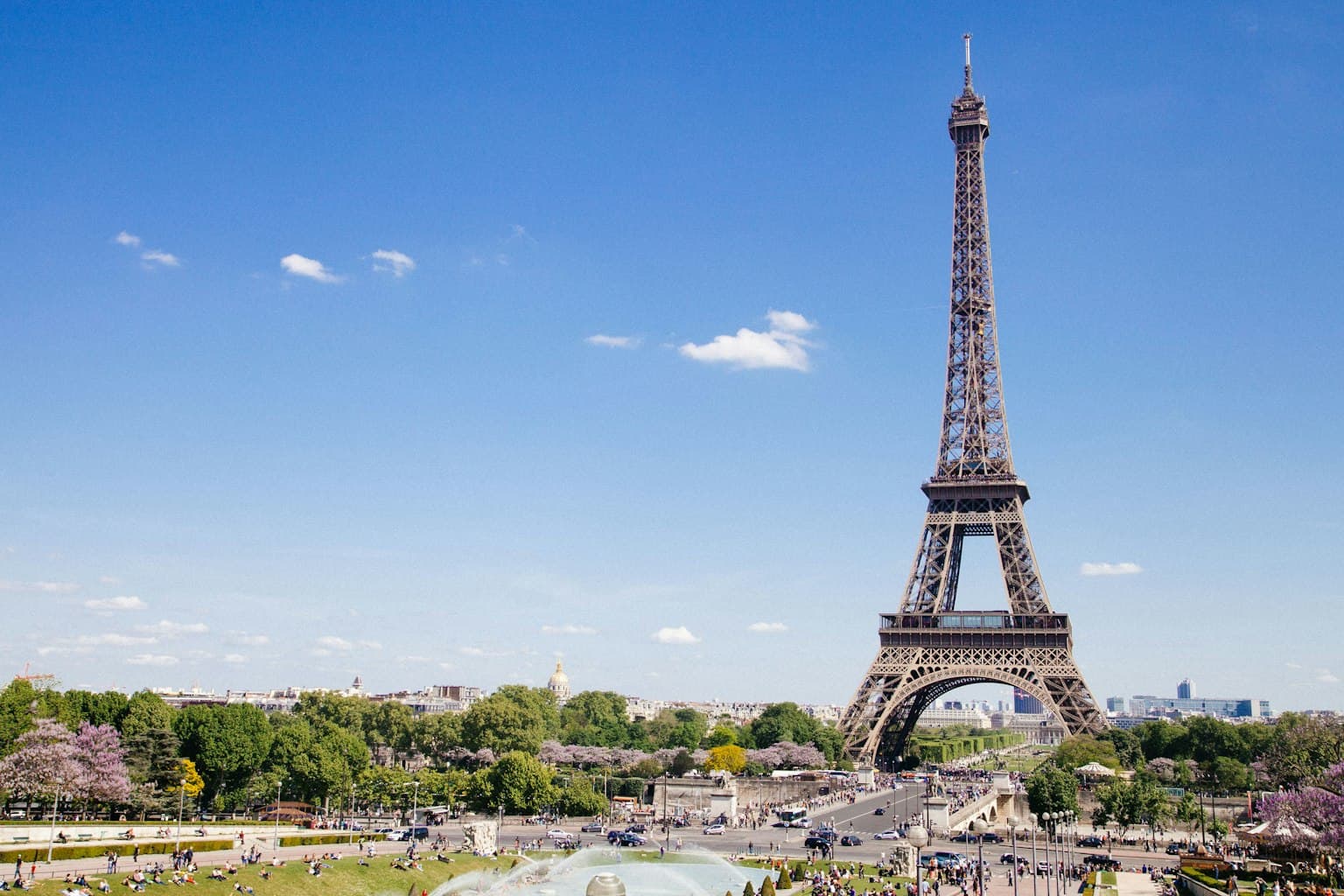
Paris might be the most over-planned city in the world. There are more "perfect three-day Paris itinerary" articles online than there are boulangeries in the 6th arrondissement. And they almost all say the same thing: the Eiffel Tower, the Louvre, a croissant on a cobblestone street, Montmartre at sunset. It's a pleasant trip. It's also interchangeable with every other tourist's trip. And it leaves a lot of people wondering why Paris didn't quite feel the way they expected it to.
The problem isn't Paris. The problem is that the itinerary wasn't built for you.
Here's something most travel planning ignores completely: two people can stand in the same city, on the same Tuesday afternoon, with the same amount of time and budget — and the right move for one of them is a three-hour lunch at a wine bar in the 11th, while the right move for the other is sitting alone in the Rodin Museum garden watching the light change. Neither is wrong. But if you handed them each other's itinerary, the trip would feel off. Slightly hollow. Like wearing someone else's shoes.
That's because what makes a trip feel right isn't just where you go — it's how the trip matches the way you actually move through the world. Your instincts about pace, beauty, solitude, novelty, history, pleasure. At Wayfound, we call these patterns travel archetypes. There are 12 of them, and they shape everything from how you pick a neighborhood to whether you'd rather spend an evening at a jazz club or a hammam.
Paris is the perfect city to see this in action, because it contains multitudes. The Paris a Cultural Immersive falls for — the workers' cafés near Rue Mouffetard, the multicultural energy of Belleville, the version of the Marais that tourists walk right past — has almost nothing in common with the Paris a Nostalgic Romantic builds around Café de Flore, the bouquinistes, and hot chocolate on Île Saint-Louis. Same arrondissements. Completely different emotional experience.
Below are five complete three-day itineraries, each designed around a specific travel archetype. Every recommendation is real, specific, and current. But the real value isn't the restaurant names — it's seeing how different the right trip looks once you stop planning for "Paris" and start planning for you.
Paris beyond the postcard
The Cultural Immersive is the traveler who gets restless the moment a place starts feeling performed. They want the real version — the neighborhood that hasn't been polished for visitors, the café where the menu is only in French, the market where the vendors know each other's names. Their instinct is always to go one layer deeper. In Paris, a city famous for its tourist-facing beauty, that instinct is especially powerful — because the Paris that lives behind the postcard is genuinely extraordinary.
Skip the Louvre. Start at the Musée de Cluny — medieval Paris, almost no crowds. Walk through the Latin Quarter listening to how the neighborhood talks, eats, moves. Lunch at a workers' café near Rue Mouffetard. Afternoon at the Grande Mosquée de Paris for mint tea in the courtyard. Evening in Belleville — Paris's most genuinely multicultural neighborhood.
Morning at the Marché d'Aligre (the most Parisian market left in Paris). Lunch at Le Baratin in the 20th — a wine bar where the menu is whatever the chef decided. Afternoon walking the Buttes-Chaumont park and the streets around it, which feel like a village. Evening cooking class at La Cuisine Paris, market-to-table.
Day in the Marais — not the boutique version, the lived-in version. Archives Nationales, the Jewish quarter on Rue des Rosiers, Place des Vosges at dusk. Dinner at Le Petit Cler on Rue Cler, surrounded by locals buying bread.
Paris as a place to feel something
The Soul Seeker uses travel as a way to hear themselves think. They're drawn to beauty, stillness, and the particular clarity that comes from being somewhere unfamiliar with no agenda. They don't need a packed itinerary — they need room. Room to walk, to sit, to let a place do its work on them. Paris, with its gardens, its riverbanks, its ancient churches full of colored light, is one of the best cities in the world for this kind of quiet, inward travel.
Morning at Sainte-Chapelle — arrive when the doors open, before the crowds, when the light through the stained glass is still low and golden. Walk to the Seine and sit. Afternoon at the Rodin Museum garden. Evening along the Canal Saint-Martin, no plan, just walking.
Start at the Père Lachaise cemetery — not for the celebrity graves but for the stillness and the old trees. Lunch at a café on Rue Oberkampf. Afternoon at the Musée de l'Orangerie, sitting with Monet's Water Lilies. Evening meditation or yoga class at one of the studios near Bastille.
Morning at the Fondation Henri Cartier-Bresson (photography and presence). Afternoon walking the Promenade Plantée — Paris's original elevated park, before the High Line existed. End at a hammam in the 10th for a ritual bath. Dinner somewhere quiet on Île Saint-Louis.
Paris as a studio with a city around it
The Creative Spirit travels to rearrange their imagination. They're drawn to places with authorship, atmosphere, and strong visual or emotional point of view. A great trip for this archetype doesn't just show them beautiful things — it changes how they see. Paris, the city that shaped Impressionism, modernism, photography, cinema, and jazz, is essentially a living art school. The Creative Spirit's version of Paris is built around encounters with work that makes them want to go make something of their own.
Morning at the Palais de Tokyo — always provocative, never boring. Lunch at the café inside or at a bistro near Trocadéro. Afternoon browsing art supply shops on Rue du Bac and independent bookstores in Saint-Germain. Evening live jazz at Le Duc des Lombards or Sunset Sunside.
Morning at the Atelier Brancusi outside Pompidou, then inside for the modern collection. Lunch at Breizh Café for buckwheat galettes. Afternoon walking the Haut Marais galleries — Perrotin, Thaddaeus Ropac, and the smaller project spaces. Evening at a film screening at the Cinémathèque Française.
Morning sketching or writing at Shakespeare and Company (arrive early for a quiet corner). Cross to the Musée d'Orsay for the Impressionists. Afternoon at the Fondation Louis Vuitton in the Bois de Boulogne — Gehry's building alone is worth the trip. Evening concert at the Philharmonie de Paris.
Paris at its most indulgent
The Bon Vivant treats taste as a form of intelligence. They build a trip around the table — not because they're shallow, but because a great meal in the right room with the right glass of wine is, for them, as moving as any museum. They savor. They notice. They care about the difference between good and great. Paris is arguably the Bon Vivant's home court: a city where food, wine, and the art of living well are not guilty pleasures but cultural values.
Morning pastry crawl: Du Pain et des Idées for the escargot pastry, Poilâne for the sourdough, Pierre Hermé for the ispahan macaron. Lunch at Le Comptoir du Panthéon with a carafe of Brouilly. Afternoon at the Palais Royal gardens. Cocktails at Le Bar du Bristol. Dinner at Le Rigmarole in the 11th.
Morning at the Marché des Enfants Rouges (Paris's oldest covered market). Brunch at Holybelly in the 10th. Afternoon wine tasting at Ô Chateau (English-speaking). Evening: aperitivo at Le Mary Celeste, then dinner at Frenchie or Clown Bar.
Morning browsing Le Bon Marché and La Grande Épicerie. Lunch at L'Ami Jean for the legendary rice pudding. Afternoon exploring the covered passages — Galerie Vivienne, Passage des Panoramas. Pre-dinner champagne at Hémisphère. Dinner at Septime (book weeks ahead) or walk-in at its wine bar, Septime La Cave.
The Paris that already felt like a memory
The Nostalgic Romantic travels toward a feeling. They're drawn to atmosphere, tenderness, and the particular beauty of old places that hold centuries of human life inside their walls. Where other travelers want novelty, the Nostalgic Romantic wants depth of time — the café that hasn't changed since Sartre sat there, the bookstalls along the river, the walled garden behind the museum. Paris is the most natural home for this archetype. It is a city that has been turning ordinary moments into aching beauty for longer than any other.
Morning walk from Pont Neuf to Île Saint-Louis — the oldest views in Paris, the quietest streets. Hot chocolate at Café de Flore (yes, it's touristy, but the room hasn't changed since Sartre sat there). Afternoon at the Musée de la Vie Romantique in Pigalle — a hidden garden, a pink house, George Sand's jewelry. Evening stroll through Montmartre after the crowds leave.
Morning at Versailles — not the palace, the Petit Trianon and Marie Antoinette's hamlet. The scale is intimate, the gardens are dreamlike. Return to Paris for late lunch at a Left Bank bistro. Afternoon browsing the bouquinistes (book stalls) along the Seine. Evening picnic on the Pont des Arts at sunset.
Morning at the Musée Jacquemart-André — a private mansion frozen in the Belle Époque. Lunch at its tearoom under the Tiepolo ceiling. Afternoon at the Luxembourg Gardens watching the model sailboats on the pond. Evening at the Opéra Garnier — even if you don't see a show, the building itself is the performance.
Closing note
Five versions of Paris, and none of them is wrong — they're just built for different people. The itinerary that feels effortless for a Soul Seeker would feel aimless to an Urban Trendster. The Bon Vivant's perfect day would overwhelm a Cultural Immersive. That's not a flaw in the city. That's a flaw in how we plan. If you found yourself nodding at one of these and skeptical of another, that tells you something real about how you travel. And if you want to know exactly which archetype you are — that's what the quiz is for.
Which traveler type are you?
Take the Wayfound quiz to discover your archetype, then come back and read the Paris itinerary that fits you best.