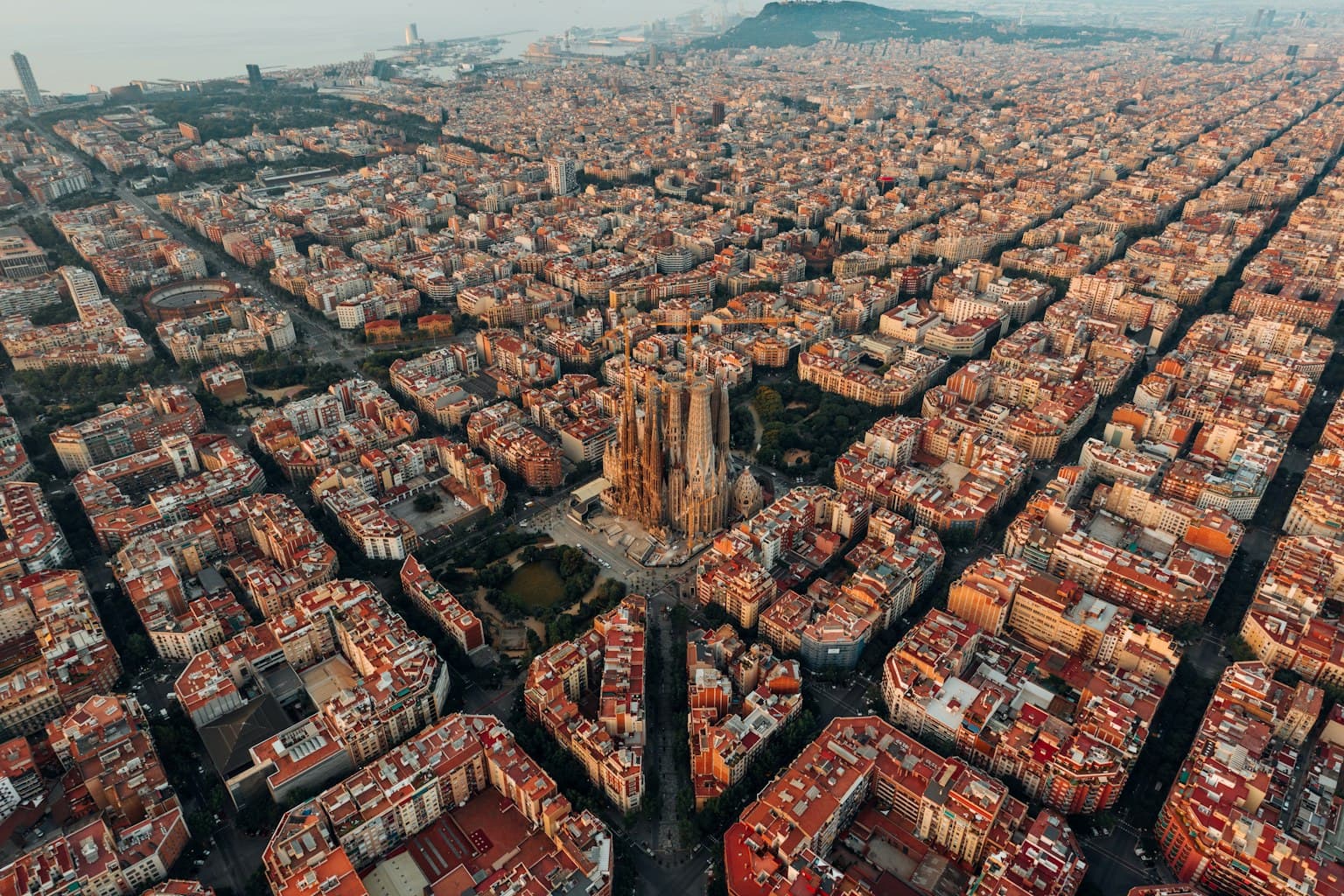
Barcelona is one of those rare cities that seems to promise everything: beach, architecture, nightlife, food, art, history, and weather that makes all of it feel effortless. Which is exactly why most itineraries blend into one undifferentiated mass of Sagrada Familia, La Rambla, paella on the waterfront. It's a highlights reel. And for a city this layered, a highlights reel misses most of what makes it extraordinary.
Barcelona doesn't need a better itinerary. It needs an itinerary that knows who it's for.
Here's the thing about Barcelona: it's actually several different cities occupying the same geography. The Gothic Quarter, with its medieval alleys and Roman walls, has almost nothing in common with the Poblenou tech-and-gallery district ten minutes away. The Eixample, with its modernista facades and upscale dining, feels nothing like the hilltop neighborhoods of Gràcia, where the plazas still function as village squares. A traveler who wants texture and local life would build an entirely different trip than one who wants design, nightlife, and what's next.
At Wayfound, we've identified 12 travel archetypes — distinct patterns of motivation and instinct that determine what makes a trip feel right. Not vague personality categories. Concrete differences in how you'd spend a free afternoon, what you'd photograph, where you'd eat, and what would make you say, "That was exactly what I needed."
Barcelona is one of the best cities in the world to see this in action, because it has genuine depth in so many directions: culture, creativity, food, energy, beauty. The version a Creative Spirit falls in love with — Gaudí's biomorphic architecture, independent galleries in Poblenou, live music in Raval — barely overlaps with the version a Communalist builds around long table dinners, beach days with friends, and late-night vermut in Gràcia.
Below are five three-day itineraries, each shaped by a different archetype. Every place is real, specific, and current. But the real value is the contrast — and what it reveals about how you actually travel.
Barcelona as a living design studio
The Creative Spirit travels to rearrange their imagination. They're drawn to places with strong aesthetic point of view — the building that takes your breath away, the gallery that changes how you see color, the neighborhood where the creative energy is palpable. Barcelona, a city shaped by Gaudí, Miró, Picasso, and an entire generation of contemporary architects and designers, is one of the most creatively charged cities in Europe.
Morning at the Sagrada Familia — book the tower access for the light through the stained glass windows (morning sun hits the warm colors on the east side). Afternoon at the Fundació Joan Miró on Montjuïc — the building and the collection are equally good. Walk through the sculpture garden. Evening exploring El Raval: MACBA plaza, independent bookshops, live music at Jamboree or Sidecar.
Start at the Hospital de Sant Pau — the most beautiful Art Nouveau building in the city, recently restored (far less crowded than Casa Batlló). Walk through the Eixample photographing modernista facades. Lunch at Federal in the Gothic Quarter. Afternoon at the Fundació Antoni Tàpies and the indie galleries of Poblenou. Evening: rooftop drinks at the Cotton House Hotel, then dinner at Dos Pebrots.
Morning at Parc Güell (early entry, before 9:30 a.m., is a different experience). Walk through Gràcia's village plazas. Lunch at La Pepita. Afternoon at the CCCB (Barcelona's most consistently interesting exhibition space) or the Picasso Museum. Evening: catch whatever's on at Palau de la Música Catalana — even if you don't love the program, the hall is a masterpiece.
Barcelona at the table
The Bon Vivant treats every meal as a way of knowing a place. They care about the wine, the room, the energy of a market at full tilt, the difference between good jamón and great jamón. They're not food tourists collecting Michelin stars — they're people for whom pleasure and attention are the same thing. Barcelona, with its world-class market culture, its Catalan wine scene, and its seamless merger of tradition and invention, is one of the Bon Vivant's essential cities.
Morning at La Boqueria — not the front stalls (tourist traps), but the back counters: El Quim for a tortilla and a glass of cava at 10 a.m. Walk through the Raval and into the Gothic Quarter. Long lunch at Cal Pep (sit at the bar for the full experience). Afternoon exploring the vermouth bars of Poble Sec — Bar Calders, Bodega Saltó. Evening: dinner at Disfrutar (book months ahead) or Lasarte.
Morning at the Mercat de Sant Antoni (renovated, gorgeous, local). Coffee at Federal. Brunch at Flax & Kale or Parking Pizza in Poblenou. Afternoon wine tasting at Monvínic — one of the best wine bars in Europe, period. Evening: pintxos crawl in Poble Sec along Carrer de Blai, then cocktails at Dry Martini.
Morning at Mercat del Ninot (the most underrated food market in Barcelona). Walk through the Eixample. Lunch at Cervecería Catalana (worth the short wait). Afternoon browsing the delis and specialty shops on Carrer de Provença. Evening: sunset aperitivo at a chiringuito on Barceloneta beach, then dinner at Compartir — the Roca brothers' casual restaurant.
The Barcelona the locals keep for themselves
The Cultural Immersive wants the version of a city that belongs to the people who live there. They get restless on La Rambla and come alive in the neighborhood bar where the bartender knows everyone's name. Their instinct is to skip the obvious and find the real. In Barcelona, where the tourist center and the local city exist almost on parallel planes, this archetype thrives — because the real Barcelona is extraordinary and remarkably accessible once you know where to look.
Morning in Gràcia — start at Mercat de l'Abaceria, then wander the plazas: Plaça del Sol, Plaça de la Vila de Gràcia, Plaça de la Virreina. Coffee where the locals sit. Lunch at La Pepita or Chivuo's. Afternoon walking the streets of Sant Antoni — the neighborhood that has quietly become one of Barcelona's most interesting. Evening at a community event or local concert in a civic center.
Morning exploring Poblenou's Rambla — not the famous one, the neighborhood one. Visit the Palo Alto market (first weekend of the month) or the Can Framis museum. Lunch at Els Quatre Gats in the Gothic Quarter (Picasso's old haunt, still operating). Afternoon in the Barceloneta neighborhood — not the beach, the old fishermen's quarter. Talk to people. Evening: bodega hopping in the Raval.
Day in the hillside neighborhoods: Sarrià-Sant Gervasi feels like a Catalan village that was swallowed by a metropolis. Mercat de Sarrià for supplies, Foix de Sarrià for pastries. Walk through the Jardins de la Tamarita. Afternoon in Horta — the Pavelló de la República and the labyrinth garden. Evening back in the center: vermouth hour at Bar Mut, dinner at Vivant.
Barcelona built for the group
The Communalist builds a trip around shared experience. Who you're with shapes what the place means — the long table, the group order, the late night that becomes the story everyone retells for years. This isn't about being social. It's about connection being the actual point of the trip. Barcelona, with its culture of communal eating, outdoor living, and late-night energy, is one of the most naturally communal cities in Europe.
Morning beach walk along Barceloneta, then group brunch at Elsa y Fred. Mid-morning visit to the Sagrada Familia (book timed entry). Lunch: long table at La Mar Salada or Kaiku on the waterfront. Afternoon at the Parc de la Ciutadella — rent rowboats on the lake, find a spot on the grass. Evening: group tapas crawl through El Born — Cal Pep, El Xampanyet, La Vinya del Senyor.
Morning at the Boqueria as a group — assign everyone a different stall, reconvene with treasures for a picnic in the Raval. Afternoon visit to Park Güell (more fun with people to share the visual insanity). Late afternoon vermouth hour at Bar Calders. Evening: book a long communal table at Cervecería Catalana or Can Paixano (La Xampanyeria) for cava and ibérico.
Morning kayaking or paddleboarding from Barceloneta beach. Group lunch at a chiringuito. Afternoon exploring Montjuïc — the castle, the gardens, the Olympic facilities. Sunset drinks at the Montjuïc cable car terrace. Evening: everyone dresses up for dinner at Tickets (or Bodega 1900), then out in El Born until the city decides it's done.
Barcelona at the frontier
The Urban Trendster moves toward where a city is becoming its next version of itself. They care about the gallery that opened last month, the neighborhood that just tipped, the restaurant everyone will be talking about in six months. Barcelona, which has been reinventing itself continuously since the 1992 Olympics, has one of Europe's most dynamic frontiers — especially in Poblenou, Sant Antoni, and the emerging creative districts that are constantly reshaping the map.
Morning coffee at Satan's Coffee Corner in the Gothic Quarter, then head to Poblenou — Barcelona's answer to Williamsburg, but with better weather. Browse the studios and galleries along Carrer de Pallars. Lunch at Can Dende (Afro-Brazilian, tiny, exceptional). Afternoon at the Disseny Hub design museum. Evening: drinks at the rooftop at the Barcelona EDITION or Monkey Bar, then dinner at Arume.
Start at the Mercat de Sant Antoni — the recently reopened market that anchors Barcelona's newest hot neighborhood. Coffee at Federal. Browse the vintage and streetwear shops along Carrer de la Riera Baixa. Lunch at Flax & Kale. Afternoon at MACBA and the surrounding plaza culture. Evening: craft cocktails at Two Schmucks, then whatever DJ is playing at Razzmatazz or Nitsa.
Morning at the Centre de Cultura Contemporània de Barcelona (CCCB) — always the most current programming in the city. Walk through El Born for the independent shops and concept stores. Lunch at Bar Brutal (natural wine and small plates). Afternoon browsing the design shops on Carrer del Rec and the emerging galleries near Palo Alto. Evening: supper at Compartir, then explore the speakeasy scene — Paradiso (enter through the fridge door) or Bobby's Free.
Closing note
Five versions of Barcelona — all sun-soaked, all real, and almost none of them overlapping. The Creative Spirit's Barcelona and the Communalist's Barcelona share a few of the same streets but almost none of the same moments. That's not a coincidence. That's what happens when you plan a trip around who you are instead of what's popular. If one of these felt like your trip and another felt like a chore, that's useful information. And if you want to know exactly which archetype is driving that instinct, the quiz takes about ten minutes.
Which traveler type are you?
Take the Wayfound quiz to discover your archetype, then come back and read the Barcelona itinerary that fits you best.