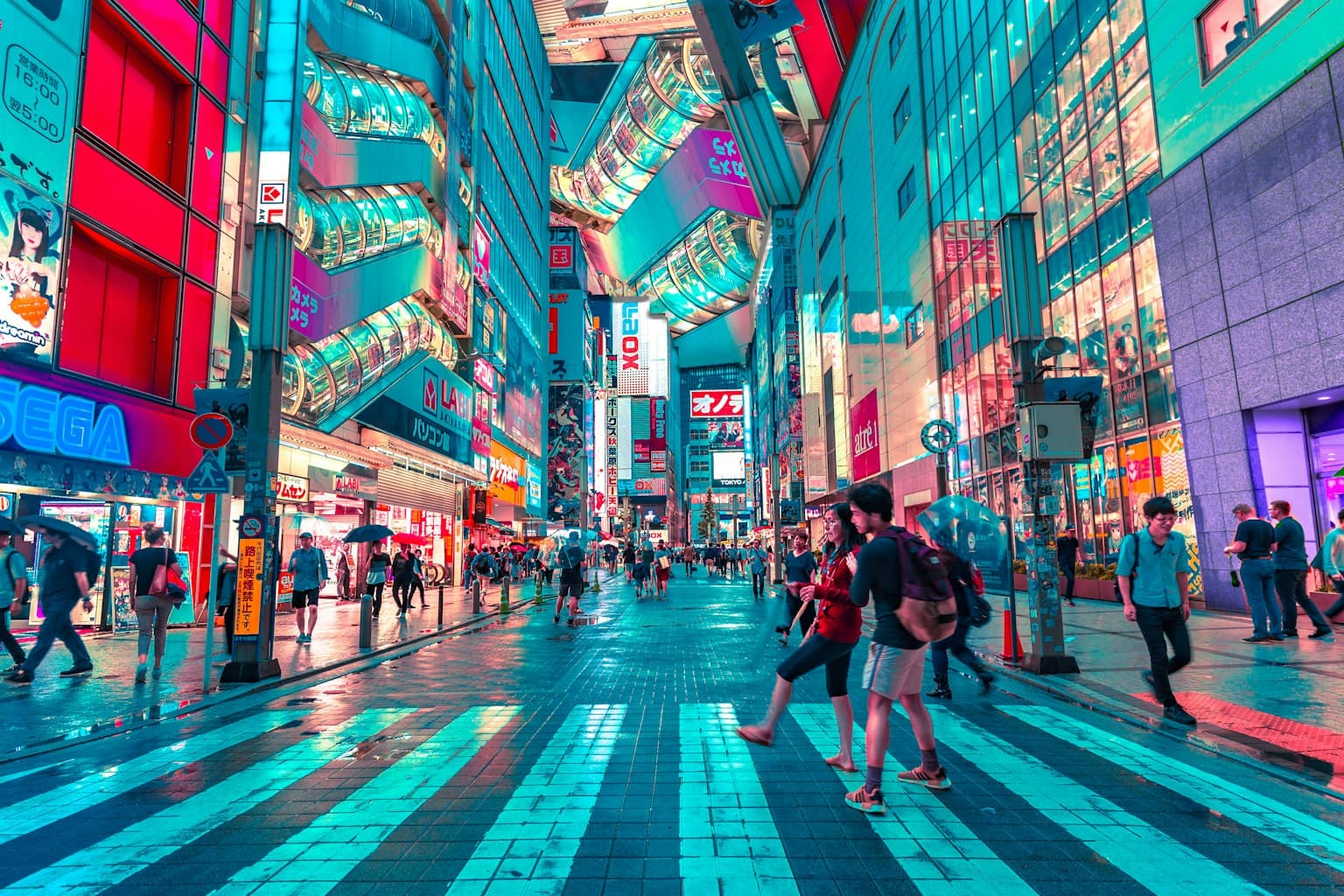
Tokyo defeats most itineraries. Not because they're bad, but because the city is so vast and so deep that a three-day greatest-hits tour — Shibuya crossing, Senso-ji, a conveyor-belt sushi place, Harajuku — captures roughly one percent of what's actually there. Most first-time visitors come home saying, "I need to go back." And they're right. But often the issue isn't that they didn't have enough time. It's that the itinerary wasn't calibrated to what they were actually looking for.
The right version of Tokyo depends on who you are more than almost any other city on earth.
Tokyo is not one city. It's a constellation of neighborhoods, each with its own personality, each deep enough to spend a week in. Shimokitazawa is a different universe from Ginza. Yanaka is a different century from Akihabara. Tomigaya is a different mood from Shinjuku. And the traveler who wants to understand the culture from the inside out would build an entirely different three days than the one who wants to eat the best food of their life.
At Wayfound, we've identified 12 travel archetypes — patterns of curiosity and instinct that shape what a great trip looks like. These aren't personality quiz labels. They're real differences in how you move through a city: what you notice, what you skip, what makes you say, "This is exactly where I'm supposed to be."
Tokyo is maybe the ultimate test case for this idea, because it rewards specificity more than any other major city. A Cultural Immersive who spends a morning at a neighborhood sento (public bathhouse) and an afternoon in a kissaten (retro coffee shop) will have a profoundly different — and equally valid — experience from a Kid-at-Heart who spends the same day at teamLab Borderless and the Ghibli Museum.
Below are five three-day itineraries, each built around a specific travel archetype. Every recommendation is real and current. But the real point isn't the list — it's seeing how different the best version of Tokyo looks depending on who's doing the traveling.
The Tokyo that lives beneath the surface
The Cultural Immersive wants to enter a place, not photograph it. They're drawn to local rhythm, unspoken rules, and the version of a culture that reveals itself slowly — through gesture, routine, and the textures of daily life. In Tokyo, a city where surface and depth are more different than almost anywhere, this archetype finds one of its richest destinations. The real Tokyo is in the neighborhood sento, the standing ramen counter, the shrine at dawn, the kissaten where the same customers have been sitting for forty years.
Morning at Meiji Shrine — arrive before 8 a.m. when the gravel path is nearly empty. Walk through Yoyogi Park. Midmorning exploring Tomigaya — Tokyo's quietest, most residential cool neighborhood. Lunch at a local ramen counter (follow the line, not the guidebook). Afternoon in Yanaka — old Tokyo: temples, wooden houses, a neighborhood that survived the war. Sunset from the Yanaka cemetery stairs.
Morning at a neighborhood sento (Daikoku-yu in Sumida or Hasunuma Onsen in Ota). Walk through Sumida or Koto ward — working-class Tokyo, almost no tourists. Lunch at a teishoku (set meal) restaurant. Afternoon at the Shitamachi Museum in Ueno — a recreation of old Edo working-class life. Evening in Koenji — Tokyo's most authentically countercultural neighborhood, live houses, jazz bars, vinyl shops.
Morning exploring Tsukiji Outer Market — not the tourist sushi shops, the knife stores, the tamagoyaki stalls, the tea merchants. Walk to Hama-rikyu Gardens. Afternoon at a kissaten (try Kayaba Coffee in Yanaka or Chatei Hatou in Shibuya) — the Japanese retro café tradition is a whole culture. Evening: izakaya hopping in Yurakucho under the train tracks.
Tokyo as the greatest food city on earth
The Bon Vivant builds a trip around the table, and in Tokyo, the table is the single most extraordinary thing the city offers. More Michelin stars than any other city in the world. The best street food. The best convenience-store food. The best everything-in-between food. For the Bon Vivant, Tokyo is not just a great food city — it's the argument that food is a legitimate reason to travel.
Morning at Tsukiji Outer Market — tamagoyaki, fresh uni, the best coffee you'll find from a standing counter. Late morning at a department-store basement food hall (depachika) — Isetan Shinjuku is the benchmark. Lunch: omakase sushi at a counter in Ginza (book ahead — even mid-range places here are extraordinary). Afternoon browsing the knife shops on Kappabashi. Evening: dinner at a kaiseki restaurant — Ishikawa or Kanda for the full experience.
Morning ramen at a legendary counter — Fuunji in Shinjuku for tsukemen or Afuri for yuzu shio. Walk through Omotesando. Lunch at Tonkatsu Maisen in Aoyama (the best deep-fried pork cutlet in Tokyo, in a converted bathhouse). Afternoon exploring the specialty shops of Aoyama and Omotesando — single-origin chocolate, Japanese whisky, artisan sake. Evening: yakitori at Birdland in Ginza, then cocktails at Bar High Five.
Morning visiting a tofu shop in Yanaka or a wagashi (traditional sweets) maker. Lunch in Kagurazaka — Tokyo's French-Japanese neighborhood, where bistros sit next to geisha houses. Afternoon: sake tasting at Imadeya in Sumida or a whisky bar in Shibuya. Evening: full kaiseki dinner at Den (playful, modern, extraordinary) or splurge at Sukiyabashi Jiro (if you can get in).
Tokyo as sensory overload, beautifully organized
The Creative Spirit travels to have their imagination rearranged. They're drawn to places with strong visual identity, unexpected beauty, and the kind of design intelligence that makes them want to go make something. Tokyo is arguably the most visually stimulating city in the world — not because it's pretty (though it can be), but because its approach to design, craft, and attention to detail produces constant small astonishments. Every surface has been considered.
Morning at teamLab Borderless (or Planets) — immersive, overwhelming, unlike anything else. Lunch in Odaiba or return to Aoyama. Afternoon at the Nezu Museum — the building (Kengo Kuma) and the garden are as good as the collection. Walk through the backstreets of Omotesando for the architecture: Tadao Ando, SANAA, Toyo Ito, all within blocks. Evening: Harajuku after dark, then a music bar in Shibuya.
Start at 21_21 Design Sight in Roppongi — Issey Miyake's foundation, always provocative. Walk through the Mori Art Museum if the exhibition is strong. Lunch at a design-forward café in Roppongi or Azabu-Juban. Afternoon in Shimokitazawa — vintage shops, independent theaters, live music venues, the most creative energy in Tokyo per square meter. Evening: jazz at Blue Note Tokyo or a DJ set in Ebisu.
Morning at the Artizon Museum in Nihonbashi (stunning renovation). Walk through Nihonbashi — Tokyo's oldest commercial district, now quietly reinventing itself. Lunch at a standing soba counter. Afternoon browsing the stationery, art supply, and design shops of Ginza and Nihonbashi — Itoya (12 floors of stationery), Takeo paper shop. Evening: explore the visual chaos of Kabukicho, then a quiet cocktail at Ben Fiddich.
Tokyo as wonderland
The Kid-at-Heart travels for wonder, novelty, and the joy of being surprised. They're not irresponsible — they're playful. They trust that delight is a valid reason to choose one experience over another, and they're drawn to places where charm, creativity, and the unexpected are woven into the fabric of daily life. Tokyo is the Kid-at-Heart's ultimate city. It is a place where a capsule-hotel stay, a robot restaurant, a seven-story arcade, and a shrine coexist on the same block — and none of it feels ironic.
Morning at the Ghibli Museum in Mitaka (book tickets exactly one month ahead — they sell out immediately). Lunch at a themed café in Kichijoji. Afternoon exploring Akihabara — the arcades, the capsule-toy floors, the maid cafés (even if you just look). Evening: dinner at Zauo (catch your own fish, they cheer when you succeed) or Robot Restaurant in Shinjuku for pure spectacle.
Morning at Odaiba — teamLab Planets (walk through water and mirrors barefoot), then the life-size Gundam statue. Lunch at a kaiten (conveyor belt) sushi place on the waterfront. Afternoon at the Pokémon Center Mega Tokyo and the Shibuya area shops. Evening: explore the golden gai bars in Shinjuku (tiny, six-seat bars, each with a theme) and end at an all-night karaoke spot.
Morning at Meiji Shrine, then Harajuku's Takeshita Street — the most visually overwhelming fashion street in the world. Lunch at a gyukatsu (deep-fried beef cutlet) counter. Afternoon at the Samurai Museum or the Trick Art Museum. Take the Yamanote line and get off wherever looks interesting. Evening: explore the yokocho (alley bars) under the tracks at Yurakucho or Ameyoko.
Tokyo at the bleeding edge
The Urban Trendster is tuned to where a city is creating its next version. They want the neighborhood that just shifted, the shop that opened last season, the cultural signal that hasn't been written about yet. Tokyo, which reinvents its neighborhoods on an almost seasonal cycle and has more design-forward retail per capita than anywhere on earth, is one of the world's great trendster cities — especially if you know which districts to watch.
Morning coffee at Onibus in Nakameguro or About Life Coffee in Shibuya. Walk through Nakameguro's boutiques and galleries along the canal. Lunch at Afuri for yuzu ramen. Afternoon in Daikanyama and Ebisu — T-Site bookstore, indie fashion, concept shops. Evening: natural wine at Ahiru Store (arrive early, tiny), then dinner at Cenci or Inua.
Start in Shimokitazawa — Tokyo's most reliably creative neighborhood. Vintage shops, record stores, independent theaters. Lunch at a new-wave curry or Chinese spot. Afternoon in Tomigaya — Fuglen coffee, Shibuya Publishing, Monocle-style boutiques. Cross to Harajuku for the Cat Street backstreet shops. Evening: a listening bar in Shibuya (Bar Martha, Lion) or live music in Koenji.
Morning at the Ginza Six rooftop garden, then explore the Ginza backstreets — the megabrand flagships get all the press but the side streets hide cutting-edge Japanese designers. Lunch at a standing soba counter. Afternoon exploring the Nihonbashi renaissance — new galleries, craft shops, and COREDO complexes mixing old Edo commerce with contemporary design. Evening: explore Sangenjaya's bar scene — the new frontier south of Shibuya.
Closing note
Five completely different Tokyos, and the city has room for a hundred more. That's not hyperbole — it's a city of 14 million people where every neighborhood is its own world. The itinerary that electrifies a Creative Spirit would frustrate a Bon Vivant. The Kid-at-Heart's perfect day would bore an Urban Trendster to tears. Same city, different travelers, different trips. If you know which of these felt most like you, start there. If you're not sure, that's exactly what the quiz is designed to answer.
Which traveler type are you?
Take the Wayfound quiz to discover your archetype, then come back and read the Tokyo itinerary that fits you best.