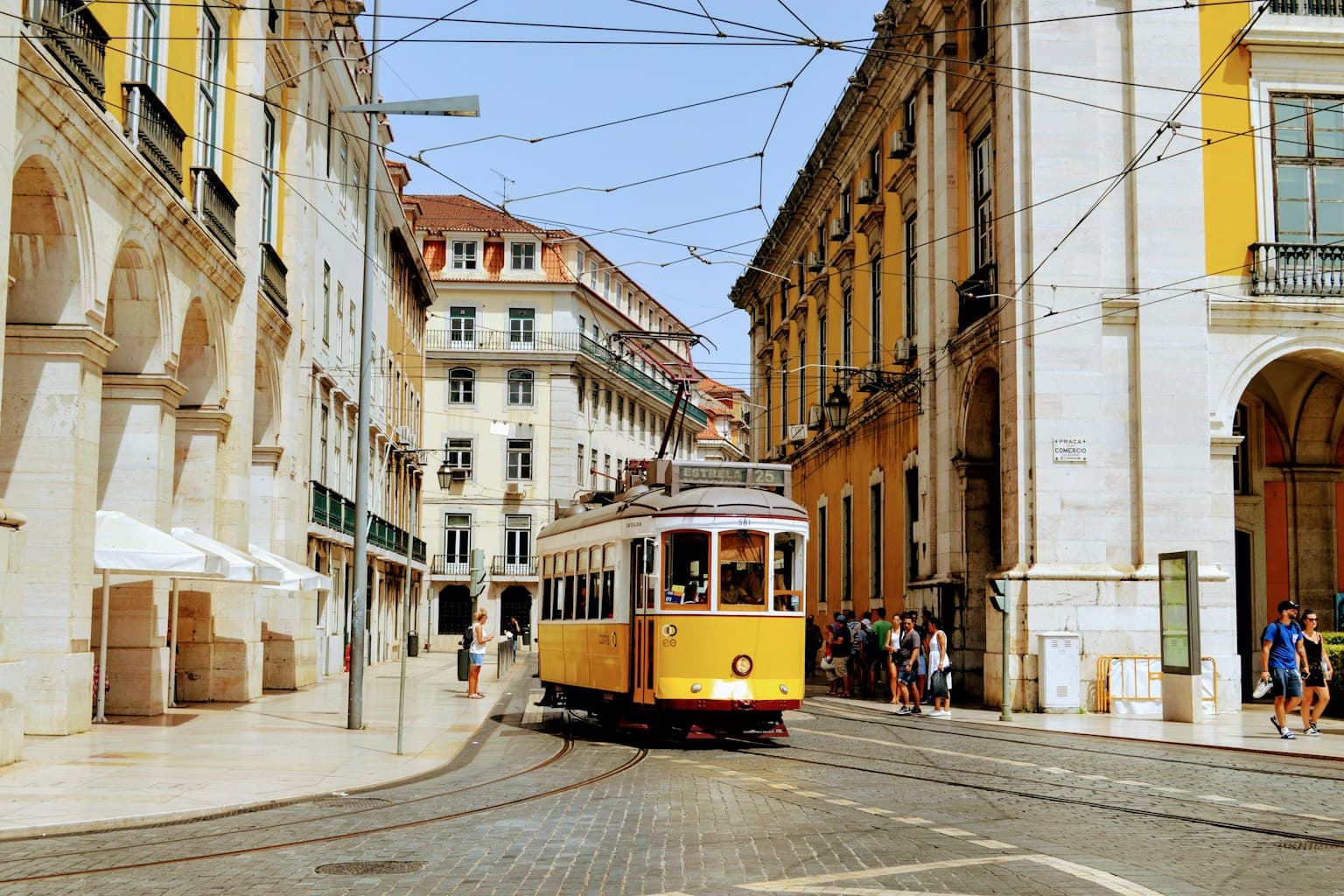
Lisbon has become one of the most popular destinations in Europe, and the standard itinerary has crystallized fast: Belém Tower, pastéis de nata at Pastéis de Belém, Tram 28, the Alfama, a sunset at a miradouro, and a night in Bairro Alto. It's a lovely introduction. It also barely touches what makes Lisbon one of the most emotionally complex, culturally layered, and quietly extraordinary cities in Europe — a former imperial capital that lost everything and rebuilt itself into something entirely new.
The Lisbon that stays with you is the one that matched something in you — not the one from the Instagram grid.
Lisbon is a city of contrasts that most itineraries smooth over. The faded grandeur of the Chiado exists next to the raw creative energy of Marvila. The melancholy of fado coexists with some of the best electronic music and nightlife on the continent. The colonial history (which Lisbon is just beginning to reckon with publicly) sits alongside a food scene that draws from Angola, Mozambique, Brazil, Goa, and Macau — one of the most interesting culinary fusions in the world, hiding in plain sight.
At Wayfound, we've identified 12 travel archetypes — patterns of motivation, curiosity, and instinct that shape what makes a trip feel right. Lisbon is a city where this matters more than usual, because its best qualities — the light, the saudade, the neighborhoods, the tiles — reward attention and intention more than speed and checklists.
Below are five three-day itineraries, each built around a different archetype. Every recommendation is real and current. The real value isn't the addresses — it's seeing how different the right Lisbon looks once you plan from who you are.
Lisbon as a place to come undone
The Soul Seeker uses travel to get quiet enough to hear themselves. They're drawn to beauty, light, water, and the kind of cities that hold space for contemplation without demanding productivity. Lisbon — with its golden afternoon light, its river views, its melancholic fado tradition, and its culture of saudade (a Portuguese word for a longing that contains both sweetness and sadness) — is one of the great Soul Seeker cities. The pace here is gentle. The beauty is everywhere. And the city doesn't ask you to hurry.
Morning walking the Alfama — before the crowds, when the neighborhood still belongs to the residents hanging laundry and the cats sleeping on doorsteps. Find a miradouro (viewpoint) and sit with the river. Lunch at a simple tascas (neighborhood tavern) — grilled fish, house wine, bread. Afternoon at the Convento do Carmo — the roofless Gothic church destroyed in the 1755 earthquake and left open to the sky as a monument. Evening: a fado house in the Alfama — not a tourist show, but a real casa de fado like Mesa de Frades or Clube de Fado.
Morning ferry across the Tagus to Cacilhas — the view of Lisbon from the water is its own meditation. Walk along the waterfront to the Cristo Rei statue (Lisbon's answer to Rio's Christ the Redeemer). Lunch at Ponto Final on the south bank (communal tables on the dock, fish from the river). Afternoon: return and visit the Museu Nacional de Arte Antiga — the collection of Portuguese painting from the Age of Discovery is haunting. Evening: walk the riverfront from Cais do Sodré to Belém at sunset.
Morning at the Estufa Fria — a botanical garden inside a former quarry, with greenhouses built under stone arches. Walk through Parque Eduardo VII. Lunch in the Príncipe Real neighborhood — quiet, leafy, full of independent bookshops. Afternoon at the Fundação Champalimaud — a research center on the waterfront with a public garden overlooking the river mouth. Sit as long as you want. Evening: dinner somewhere simple, then a last walk through the Chiado.
Lisbon as light, tile, and reinvention
The Creative Spirit travels to have their imagination rearranged — and Lisbon's light, its azulejo tile tradition, its crumbling-and-rebuilt aesthetic, and its post-industrial creative districts produce a visual environment unlike anywhere else in Europe. The city has been attracting artists, designers, and creative entrepreneurs at a remarkable rate, and the result is a contemporary art and design scene layered on top of centuries of decorative tradition.
Morning at the Museu Nacional do Azulejo — the national tile museum, housed in a 16th-century convent. The collection traces the evolution of Portuguese tile art from Moorish geometry to contemporary installation. Lunch in the Graça neighborhood. Afternoon walking the streets of the Alfama and Mouraria specifically to photograph azulejos — every facade is different. Evening: gallery openings in the Chiado or a performance at the São Luiz Teatro Municipal.
Morning exploring Marvila — Lisbon's former industrial district, now its most exciting creative frontier. Visit Underdogs Gallery (street art and contemporary), then the studios and workshops in the converted warehouses. Lunch at Ponto Final or a cervejaria in Marvila. Afternoon at the MAAT (Museum of Art, Architecture and Technology) on the Belém waterfront — the building by Amanda Levete is extraordinary. Evening: live music at Musicbox or a jazz show at Hot Clube de Portugal (the oldest jazz club in the Iberian Peninsula).
Morning at the Berardo Collection in the CCB (Centro Cultural de Belém) — a world-class modern art collection that's free. Walk through the Jerónimos Monastery for the Manueline architecture. Lunch in Belém. Afternoon: explore the LX Factory — a converted industrial complex with studios, bookshops, galleries, and the famous Ler Devagar bookshop (books stacked floor to ceiling in a former printing press). Evening: sunset drinks at a rooftop bar, dinner at a creative restaurant in Príncipe Real.
Lisbon at the table
The Bon Vivant builds a trip around taste, and Lisbon's food scene is one of Europe's most underrated. The Portuguese relationship with seafood is unmatched — grilled sardines, bacalhau (salt cod) prepared 365 ways, percebes (goose barnacles) that taste like the ocean. Add in the pastéis de nata, the natural wine revolution, the Angolan and Mozambican influences, and the cervejarias (beer halls) where locals have been eating shellfish since the 1920s, and you have a food city that rivals Lisbon's more famous Mediterranean peers.
Morning at the Mercado da Ribeira (Time Out Market) — skip the branded stalls and find the real market upstairs. Or better: the Mercado de Campo de Ourique, where locals actually shop. Late morning pastéis de nata at Pastéis de Belém (the original, since 1837 — yes, it's touristy, and yes, they're still the best). Lunch: bifana (pork sandwich) at a counter in Dafundo or a cervejaria for shellfish — Cervejaria Ramiro is legendary but Cervejaria da Esquina is better. Evening: wine tasting at By the Wine, dinner at Belcanto (José Avillez's two-star, book weeks ahead).
Morning food tour of the Mouraria — Lisbon's most multicultural neighborhood, where African, Chinese, Indian, and Portuguese food cultures collide. Lunch at Chapitô (acrobatics school turned restaurant, terrace with a view). Afternoon: natural wine bar hopping — Comida Independente, Old Pharmacy Wine Bar, or Bar da Velha Senhora. Evening: petiscos (Portuguese tapas) at Taberna da Rua das Flores, then dinner at Prado.
Morning: seafood market at Sesimbra or Setúbal (30-40 minutes from Lisbon — coastal towns where fishing boats still unload on the quay). Eat grilled fish at a tascas overlooking the harbor. Afternoon: return for ginjinha (cherry liqueur) at a stand in Rossio — one shot, served in a chocolate cup. Browse the gourmet shops on Rua do Arsenal. Evening: splurge dinner at Alma (Portuguese-forward, inventive) or A Cevicheria.
The Lisbon that lives in the neighborhoods
The Cultural Immersive wants to understand a place from the inside — the daily rhythms, the neighborhood identities, the culture as it's actually lived. Lisbon is perfect for this archetype because its barrios (neighborhoods) are so distinct: the Alfama is a Mediterranean village inside a capital city, the Mouraria is Lisbon's multicultural heart, Graça is working-class and proud, and each one has its own markets, its own fado houses, its own rhythm. The Cultural Immersive's Lisbon is built on foot, slowly, in the places tourists walk past.
Morning in the Mouraria — Lisbon's oldest neighborhood, where the Moors lived after the Christian reconquest and where the city's immigrant communities now make their home. Walk the narrow streets, visit the Casa da Achada community center. Lunch at a Mozambican restaurant on Rua do Benformoso. Afternoon exploring Graça — take the 28 tram (or walk) to the miradouro da Graça. Visit the Feira da Ladra flea market (Tuesdays and Saturdays). Evening: fado vadio (amateur fado night) at a tascas in the Alfama.
Morning walking the Alfama — but not the tourist route. Go uphill from the riverfront, into the backstreets where the laundry hangs and the sardine grills smoke. Visit the Museu do Fado to understand the history behind the music. Lunch at a neighborhood tascas. Afternoon: ferry to Almada on the south bank and walk the waterfront — a completely different Lisbon, working-class and overlooked. Evening: dinner in Santos, then a drink at a working-class bar in Cais do Sodré.
Morning at the Mercado de Campo de Ourique — locals, not tourists. Walk through the Campo de Ourique neighborhood (residential, quiet, full of small shops). Lunch at a churrasqueira (rotisserie chicken — the Portuguese version is extraordinary). Afternoon exploring Madragoa and Lapa — old aristocratic neighborhoods on the western edge, with embassies, antique shops, and views over the river. Evening: neighborhood fado in Madragoa or a concert at the CCB.
The Lisbon that already felt like a memory
The Nostalgic Romantic is drawn to atmosphere, beauty, and the ache of old places — and Lisbon might be the most naturally romantic city in Europe, in the old sense of the word. The crumbling facades, the golden light, the Tram 28 rattling through streets too narrow for it, the fado that turns longing into art, the miradouros where the whole city seems to hold its breath at sunset. Lisbon has saudade built into its architecture. For the Nostalgic Romantic, it's a city that already feels like the most beautiful memory you haven't had yet.
Morning ride on Tram 28 (early, before the crowds — by 9 a.m. it's packed). Get off in the Alfama and walk downhill through the medieval streets to the river. Stop at the Se Cathedral (12th-century, fortress-like, cool inside). Lunch at a tascas with checked tablecloths and handwritten menus. Afternoon: the Convento do Carmo (the earthquake-ruined church, open to the sky). Evening: miradouro da Graça at sunset, then fado at Mesa de Frades.
Morning at the Jerónimos Monastery in Belém — the Manueline stonework is some of the most romantic architecture in Europe. Walk to the Torre de Belém along the river. Pastéis de nata at the original bakery. Afternoon: ride the Elevador de Santa Justa (the neo-Gothic iron elevator designed by a student of Eiffel). Browse the bookshops of the Chiado — Bertrand is the world's oldest operating bookshop (1732). Evening: dinner at a candlelit restaurant in the Bairro Alto, then a walk through the empty streets of the Chiado after midnight.
Morning at the Palácio Nacional de Sintra (30 minutes by train) — a fairy-tale palace in the mountains above Lisbon, surrounded by mist and gardens. Walk through the Sintra forest to the Pena Palace (the colors are improbable). Lunch at a restaurant in Sintra village. Afternoon: return to Lisbon for the Museu Nacional de Arte Antiga — the Panels of Saint Vincent are mesmerizing. Evening: one last sunset from a miradouro, one last glass of port, one last walk along the river.
Closing note
Five Lisbons — one built around silence and light, another around the table, another around the creative frontier, another around neighborhood rhythms, and one that treats the whole city as a poem. None of them is the "correct" Lisbon. But one of them is probably yours. If you're not sure which, the quiz takes about ten minutes and might change how you plan your next trip entirely.
Which traveler type are you?
Take the Wayfound quiz to discover your archetype, then come back and read the Lisbon itinerary that fits you best.