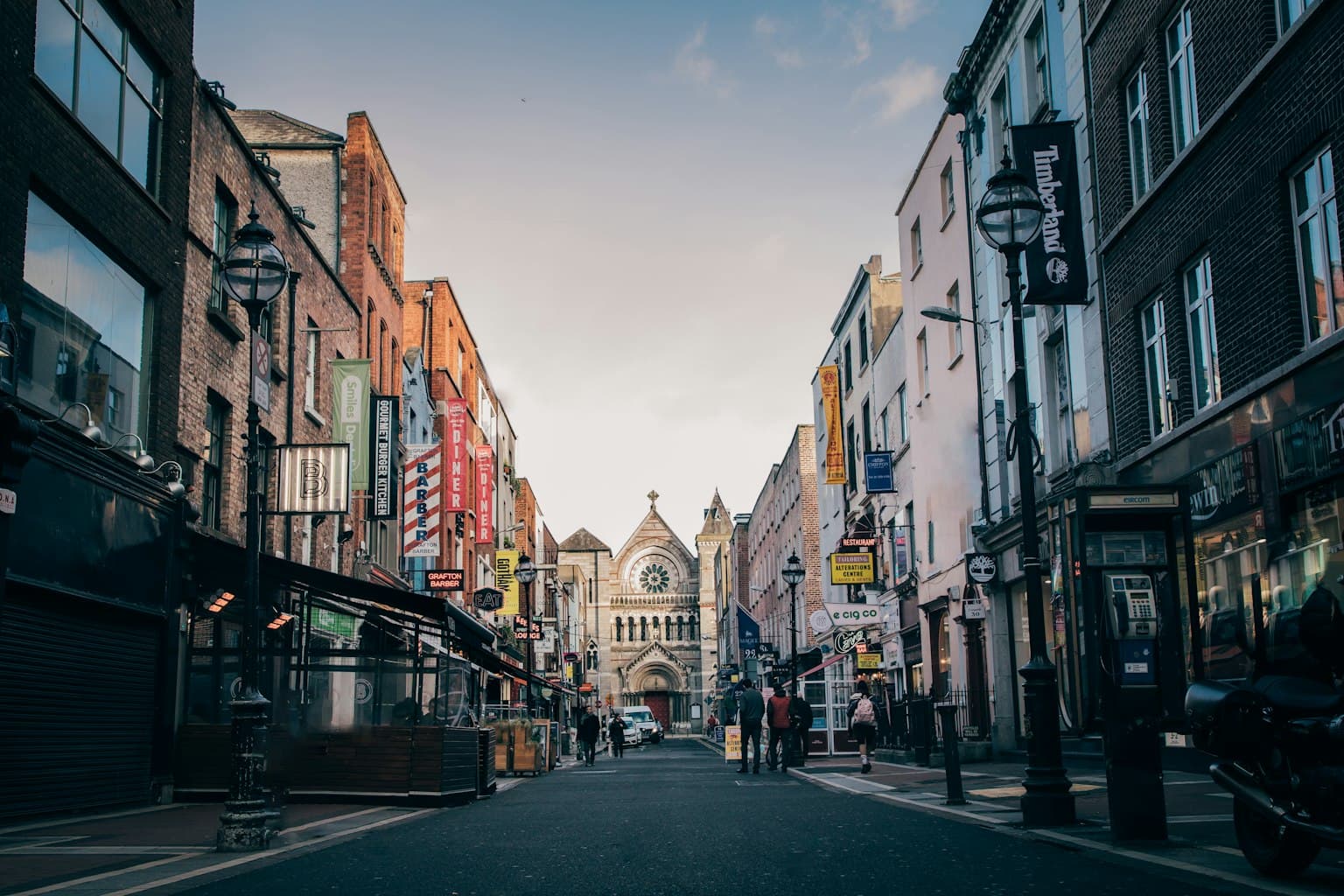
Dublin is one of those cities that travelers think they already understand before they arrive. Temple Bar, the Guinness Storehouse, the Book of Kells, a trad session in a pub, maybe a literary walking tour. It's a perfectly pleasant itinerary. It's also the exact same trip that three million visitors take every year, and it misses most of what makes Dublin one of the most distinctive, complicated, and emotionally resonant small capitals in Europe.
The Dublin worth planning for is the one that matches who you actually are — not the one from the tourism poster.
Dublin is a city of stories, and that cuts both ways. The tourist-board story — friendly, literary, musical, Guinness — is true enough but paper-thin. Beneath it is a city with a thousand years of colonial and revolutionary history, a contemporary food and art scene that's growing faster than anyone expected, a relationship with language and humor that's unlike anywhere else, and neighborhoods where the real Dublin is being lived by people who wouldn't be caught dead in Temple Bar.
At Wayfound, we've identified 12 travel archetypes — distinct patterns of motivation, curiosity, and instinct that determine what a great trip looks like. Dublin, despite being small enough to walk across in forty minutes, has genuine depth in several different directions: literary, culinary, musical, historical, and just plain human.
Below are five three-day itineraries, each designed for a different archetype. Every recommendation is real and specific. Some of these Dublins overlap — you might see the same pub appear twice — but the trips they produce are fundamentally different experiences.
Dublin as a lesson in language, rebellion, and survival
The Lifelong Learner travels to understand how the world works, and Dublin is a city whose history reads like a condensed course in colonialism, resistance, literary genius, and reinvention. From the Book of Kells to the GPO rising to the Celtic Tiger to the crash and recovery — it's all here, walkable, and exceptionally well-told. Dublin has some of the best museums per capita of any city in Europe, and most of them are free.
Morning at the Chester Beatty Library in Dublin Castle — one of the world's great collections of manuscripts, miniatures, and sacred texts (free, uncrowded, extraordinary). Walk through Dublin Castle itself for the colonial-era government context. Lunch at a pub near Dame Street. Afternoon at Kilmainham Gaol — where the leaders of the 1916 Rising were executed. The guided tour is one of the most powerful museum experiences in Europe. Evening: browse at Hodges Figgis bookshop on Dawson Street.
Morning at Trinity College — the Book of Kells and the Long Room (book timed entry). Walk through the college grounds. Lunch on Merrion Row. Afternoon at the National Museum of Ireland — Archaeology (the bog bodies exhibit is unforgettable). Then walk to the National Gallery. Evening: attend a lecture or reading — Dublin's literary scene is more active than you'd think. Check the Irish Writers Centre or Smock Alley Theatre.
Morning walking the 1916 trail: the GPO on O'Connell Street, the bullet holes still visible, the statue of Cú Chulainn inside. Walk to the Glasnevin Cemetery Museum for the Irish history tour (the guides are extraordinary). Lunch in Stoneybatter — Dublin's most authentic northside neighborhood. Afternoon at 14 Henrietta Street — a Georgian townhouse that tells the history of Dublin through one building, from aristocratic mansion to tenement. Evening: trad music at the Cobblestone in Smithfield.
Dublin as the warmest room you've ever been in
The Communalist builds a trip around shared experience — the long table, the pub session, the conversation with a stranger that turns into an evening. Connection is not an add-on for this archetype; it's the point. And Dublin, a city whose culture is literally built around gathering, storytelling, and the pub as community center, might be the most naturally communal city in Europe. The Irish gift for conversation is not a stereotype. It's an infrastructure.
Morning walk through Stephen's Green and Merrion Square. Coffee at 3FE or Clement & Pekoe. Late morning at the Guinness Storehouse (yes, it's touristy — but the Gravity Bar at the top, with 360-degree views and a free pint, is a great group experience). Lunch at a long table at Wowburger or Bunsen. Afternoon: walking food tour through the Liberties (the oldest part of Dublin). Evening: trad session at the Cobblestone — sit, listen, buy a round, talk to people.
Morning at Howth — take the DART (30 minutes from the center). Walk the cliff path, eat fish and chips at Beshoff Bros or Leo Burdock's. Afternoon back in Dublin: explore the markets at George's Arcade or the Dublin Flea Market. Evening: group dinner at Etto or Delahunt, then pub crawl with purpose — Grogan's for the characters, Kehoe's for the atmosphere, Mulligan's for the Guinness, Toner's for the snug.
Morning cooking class or food tour (Dublin has several focused on Irish farmhouse producers). Lunch at Fumbally in the Liberties (communal tables, good conversation). Afternoon at the Irish Whiskey Museum or Teeling Distillery for a group tasting. Evening: book a private snug at the Long Hall or a group session at the Palace Bar, then end with live music at Whelan's.
The Dublin behind the craic
The Cultural Immersive wants the version of a city that belongs to its residents — the neighborhood pub with no sign, the local market, the cultural rhythms that aren't explained to visitors. Dublin, a city small enough to walk but deep enough to get lost in, rewards this instinct beautifully. The real Dublin is in Stoneybatter, Phibsborough, Harold's Cross, and Rialto — neighborhoods that tourists don't visit, where the culture is working-class, local, and utterly itself.
Morning walking Stoneybatter — Dublin's most authentic residential neighborhood on the northside. Coffee at Love Supreme. Browse the vintage shops on Manor Street. Lunch at L. Mulligan Grocer (a pub that takes food and whiskey as seriously as conversation). Afternoon exploring Smithfield — the Jameson Distillery is there but so is the Lighthouse Cinema and the Saturday market. Evening: a play at the Gate Theatre or the Abbey.
Morning in Portobello and the South Circular Road — Dublin's most quietly interesting neighborhood. Walk along the Grand Canal (where Kavanagh's bench sits). Lunch at Camerino or a café on Camden Street. Afternoon exploring the Liberties — the oldest working-class neighborhood in Dublin: St Patrick's Cathedral, the Iveagh Markets (gorgeous, empty, haunting), the Teelings distillery. Evening: trad at O'Donoghue's on Merrion Row (where the Dubliners started).
Take the DART north to Malahide or south to Dalkey — both are coastal villages swallowed by the city, each with a castle, a harbor, and pubs with sea views. Lunch at a pub overlooking the water. Afternoon walking the coastal path. Return to Dublin for dinner in Phibsborough — another working-class northside neighborhood in mid-transformation. Evening: gig at Vicar Street or the National Concert Hall.
Dublin's new food identity
The Bon Vivant builds a trip around the table, and Dublin's food scene has transformed almost beyond recognition in the last decade. What was once a city of reliable pub grub is now producing some of Europe's most interesting farm-to-table cooking, fueled by Ireland's extraordinary raw ingredients: Atlantic seafood, grass-fed dairy, heritage pork, wild game. The Bon Vivant's Dublin is built around this quiet revolution — and the craft whiskey and natural wine that go with it.
Morning at the Temple Bar Food Market (Saturdays — the real one, not the tourist pubs). Sample farmhouse cheeses, organic sourdough, wild smoked salmon. Lunch at Chapter One — Dublin's most acclaimed fine-dining restaurant, now in the basement of the Dublin Writers Museum. Afternoon: craft beer tasting at Rascals Brewing in the Liberties. Evening: cocktails at Bar 1661, dinner at Bastible.
Morning at Fallon & Byrne on Exchequer Street — browse the food hall and deli. Coffee at 3FE. Lunch at Delahunt — an old Victorian grocery shop turned modern Irish restaurant. Afternoon: Irish whiskey tasting at Teeling or the new Roe & Co distillery in the Liberties. Evening: dinner at Liath in Blackrock (two Michelin stars, take the DART) or Aimsir in Celbridge if you can get a table.
Morning food tour of the Liberties and the markets. Lunch at Assassination Custard (tiny, brilliant, seasonal). Afternoon: exploring the cheese shops, butchers, and delis around George's Street. Evening: pre-dinner natural wine at Loose Canon, then dinner at Uno Mas (Spanish-Irish, outstanding) or Etto (Italian-Irish, intimate). Nightcap: proper pint of Guinness at Mulligan's — the best pour in the city, no debate.
Dublin as literary atmosphere
The Nostalgic Romantic travels toward feeling — atmosphere, beauty, and the particular ache of old places that hold centuries of human life in their walls. Dublin, a city soaked in literary memory (Joyce, Yeats, Wilde, Beckett, Bowen), with its Georgian terraces, its Victorian pubs, its rain-slicked cobblestones, and its culture of melancholy and humor braided together, is one of the great Nostalgic Romantic cities. The atmosphere here is not performed. It's the actual texture of the place.
Morning at the Long Room at Trinity College — one of the most beautiful rooms in Europe. Walk through the college grounds to Merrion Square (Oscar Wilde's house, the statue of him lounging on the rock). Lunch at Davy Byrne's on Duke Street (the "moral pub" from Ulysses). Afternoon at the Little Museum of Dublin on Stephen's Green — eccentric, personal, deeply Irish. Evening walk along the Grand Canal to Kavanagh's bench, then a candlelit pint at the Long Hall.
Morning at Glasnevin Cemetery — the most atmospheric graveyard in Ireland, where the entire history of the nation is buried. Walk through the Botanic Gardens (free, beautiful, uncrowded). Lunch in Stoneybatter at a pub with no pretensions. Afternoon at the Hugh Lane Gallery in Parnell Square — Francis Bacon's studio, reconstructed piece by piece. Evening: Evensong at Christ Church Cathedral, dinner at a pub with open fires.
Morning walking the Ulysses trail (or just the key stops: Sweny's Pharmacy, still selling lemon soap; the Martello Tower at Sandycove, where the novel begins). Take the DART to Dalkey and walk the village — Maeve Binchy lived here, so did Shaw. Lunch at a pub overlooking Killiney Bay. Afternoon back in the city: browse the rare-book shops on Francis Street. Evening: a play at the Abbey Theatre, then a last pint at Toner's or Kehoe's.
Closing note
Five versions of Dublin. One barely left the pubs. One never entered them. One was built around the table, another around the library, another around neighborhoods most tourists never see. Same city, different travelers, different trips. If you recognized yourself in one of these, that's your Dublin. If you're torn between two or three, the quiz can help you sort it out — and it only takes about ten minutes.
Which traveler type are you?
Take the Wayfound quiz to discover your archetype, then come back and read the Dublin itinerary that fits you best.